
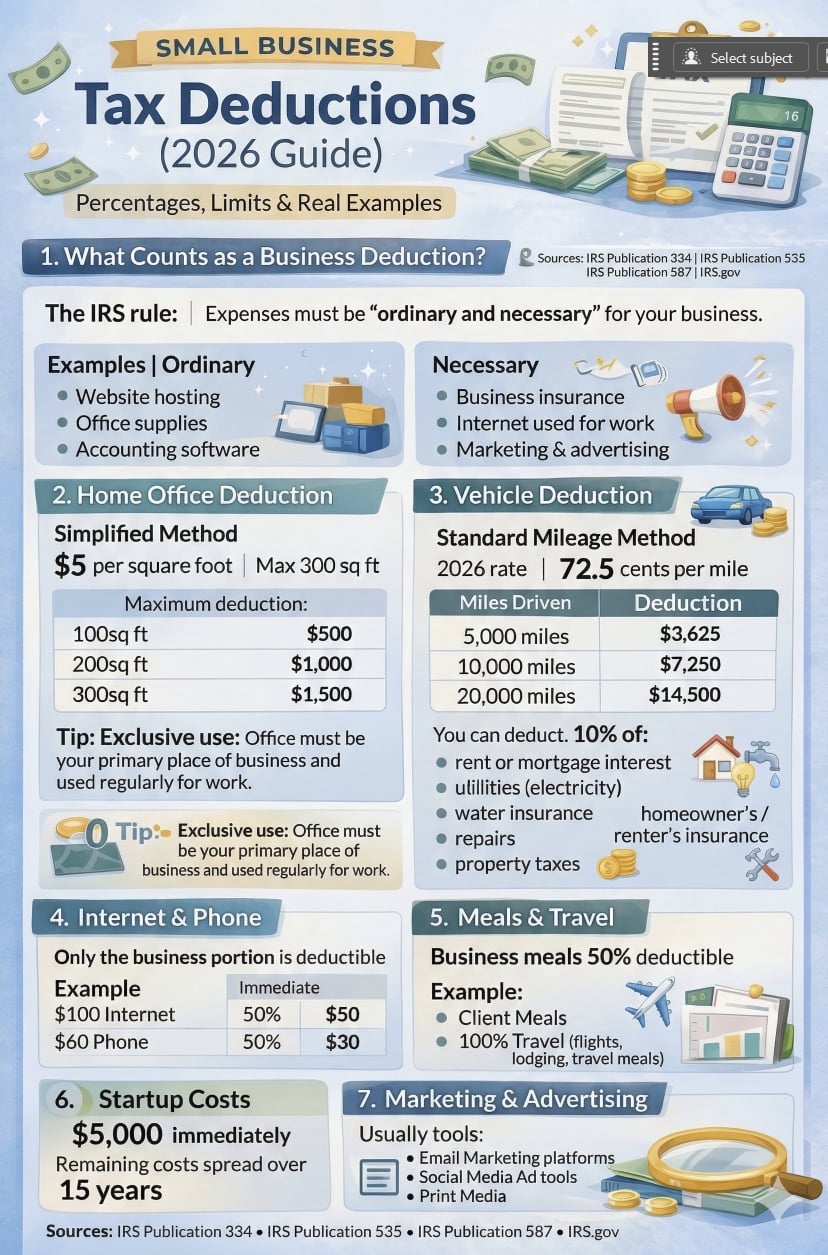
Below is an SEO-optimized article tailored for your site senditsheets.com. It leverages the topics from the infographic (small business tax deductions) and naturally ties them to document extraction, receipts, and financial recordkeeping—areas where your tool is relevant. The structure is designed for SEO with clear headings, keywords, and scannable sections.
Small Business Tax Deductions (2026 Guide): What You Can Write Off and How to Track It Easily
Running a small business comes with many expenses—but the good news is that many of those costs can reduce your tax burden. Understanding what qualifies as a tax deduction and how to properly track it can save business owners thousands of dollars each year.
In this guide, we break down common small business tax deductions for 2026, including percentages, limits, and examples. We’ll also explain how better document organization and automated data extraction can make tax season much easier.
What Counts as a Business Tax Deduction?
The general rule is simple: business expenses must be “ordinary and necessary” for operating your business.
Ordinary means the expense is common in your industry.
Necessary means the expense helps your business operate or grow.
Examples of Ordinary Business Expenses
Common deductions include:
Website hosting
Office supplies
Accounting or bookkeeping software
Cloud storage and productivity tools
Examples of Necessary Business Expenses
These include costs required to operate effectively, such as:
Business insurance
Internet service used for work
Marketing and advertising
Software subscriptions
For many businesses, these expenses are supported by invoices, receipts, purchase orders, and vendor documents—which is why organizing these documents is critical for accurate deductions.
Home Office Deduction
Many entrepreneurs work from home, and the home office deduction allows them to write off a portion of their living space used exclusively for business.
Simplified Method
$5 per square foot
Maximum 300 square feet
Maximum deduction: $1,500
Example:
| Office Size | Deduction |
|---|---|
| 100 sq ft | $500 |
| 200 sq ft | $1,000 |
| 300 sq ft | $1,500 |
Important rule:
Your workspace must be used regularly and exclusively for business purposes.
Vehicle Deduction
If you use your vehicle for business activities—such as visiting clients or picking up supplies—you may deduct mileage.
Standard Mileage Method (2026)
72.5 cents per mile
Example deductions:
| Miles Driven | Potential Deduction |
|---|---|
| 5,000 miles | $3,625 |
| 10,000 miles | $7,250 |
| 20,000 miles | $14,500 |
Maintaining accurate mileage logs is important to support this deduction.
Internet and Phone Expenses
Many small business owners work from home and share internet and phone services between personal and business use.
Only the business portion is deductible.
Example:
| Expense | Business Portion | Deductible |
|---|---|---|
| $100 Internet | 50% | $50 |
| $60 Phone | 50% | $30 |
Keeping monthly invoices and billing statements is critical to documenting these expenses properly.
Meals and Travel
Business-related meals and travel are common deductions.
Meals
50% deductible if related to business activity
Example: client meetings or networking lunches
Travel
Travel expenses are typically 100% deductible if the trip is primarily for business purposes.
Examples include:
Flights
Hotels
Rental cars
Conference registration
Travel meals
This is where organized receipt tracking becomes essential, especially when dealing with multiple vendors and expenses during trips.
Startup Costs
If you recently launched a business, you can deduct many initial costs.
Startup Deduction Rules
Up to $5,000 immediately deductible
Remaining costs amortized over 15 years
Startup costs may include:
Legal or business formation fees
Market research
Branding and marketing
Website development
Software setup
Keeping invoices and financial documentation organized from the beginning will help ensure you claim these deductions correctly.
Marketing and Advertising
Promoting your business is generally fully deductible.
Examples include:
Social media ads
Email marketing platforms
Print marketing materials
Website hosting and development
Graphic design services
For online businesses and startups, marketing expenses often appear across multiple invoices, platforms, and PDF reports, making automated data extraction helpful for keeping records clean and organized.
Why Expense Tracking Matters for Tax Deductions
The biggest challenge for many business owners isn’t knowing what deductions exist—it’s keeping accurate documentation.
During tax season, businesses often need to locate:
Vendor invoices
Expense receipts
Purchase orders
Expense reports
Subscription billing statements
Manually reviewing dozens or hundreds of documents can be time-consuming and error-prone.
Simplifying Tax Recordkeeping with Automated Data Extraction
Many financial documents are stored as PDFs or scanned files, which makes extracting structured data difficult.
Tools like SendItSheets help automate this process by converting documents such as:
invoices
purchase orders
receipts
financial statements
into structured spreadsheet data.
Instead of manually copying numbers from PDFs, business owners can quickly transform their documents into organized datasets that are easier to analyze, categorize, and store for tax reporting.
This makes it significantly easier to:
track deductible expenses
organize vendor payments
prepare documentation for accountants
maintain clean financial records
Better data organization means less stress at tax time and fewer missed deductions.
Final Thoughts
Small business tax deductions can significantly reduce your taxable income, but they depend on accurate recordkeeping and documentation.
Key deductions to remember include:
Home office expenses
Vehicle mileage
Internet and phone usage
Meals and travel
Startup costs
Marketing and advertising
By maintaining organized financial records—and using tools that automate document extraction—you can make tax preparation faster, easier, and more accurate.
✅ Pro Tip:
Keeping invoices and receipts organized throughout the year ensures you never miss a deduction when tax season arrives.
If you'd like, I can also help you create:
SEO meta title + meta description
internal keyword strategy for SendItSheets
schema markup for blog SEO
a featured image optimized for this article
additional SEO articles that drive traffic to SendItSheets (very useful for growing organic traffic).